Then the window closes. The question is not whether it closes. The question is what is still working for you on the other side.
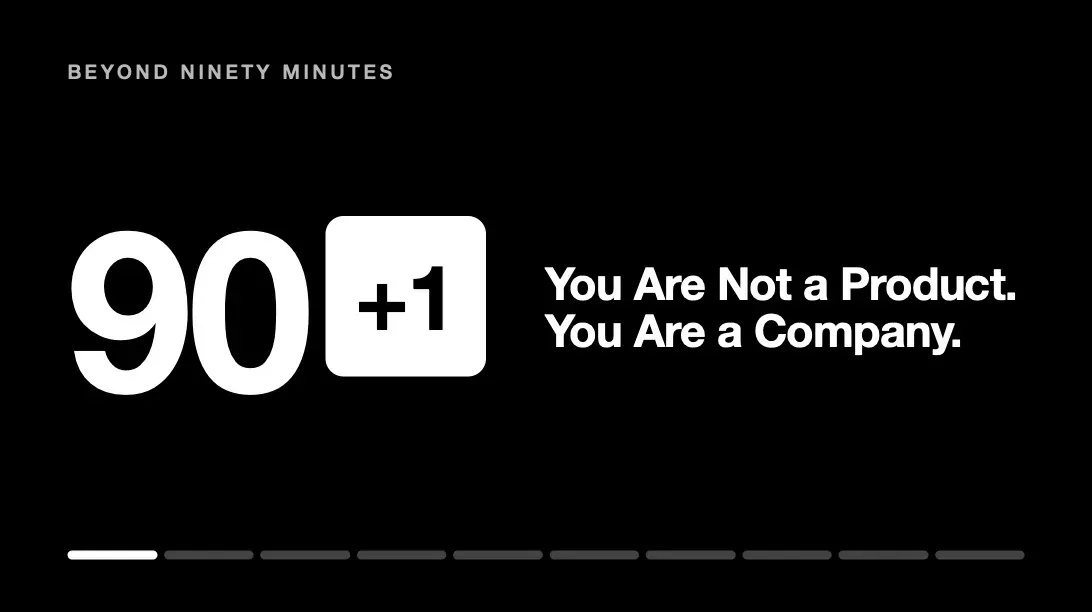
Most of the advice aimed at athletes treats you as a product. Something to be marketed, rented, and sold while demand is high. Sell the shirt. Sell the boot deal, the appearance, the post. Maximise the rate while the rate is maximal. None of that is wrong. It is just small. A product gets consumed. A company compounds.
During your active years you generate four kinds of capital. Most players liquidate three of them the moment they arrive and never build the fourth.
Attention. People listen to you. Cameras point at you without being asked. Most players treat this as something to cash out one post at a time. It is a distribution asset, and it is worth the most on the day no one is obligated to point a camera at you anymore.
Access. You can get a meeting with almost anyone. Founders spend years trying to reach the people who would take your call tomorrow. That door is at its widest while you play, and it narrows quickly once you stop.
Capital. The money the contracts pay. This is the one most people do think about, usually defensively. Park it, protect it, do not lose it. That instinct is correct but incomplete. Money is also fuel.
Clarity. Knowing what you would build if football disappeared tomorrow. This is the one almost nobody builds during the career, and the one that takes the longest. It cannot be bought at thirty-four in a hurry.
There are two problems every athlete eventually has to answer. Money and identity. The money problem has known solutions. Advisors, family offices, diversified portfolios, an entire industry exists to help you solve it, and the good ones do.
The identity problem has no such industry. Almost no one builds you a system for working out who you are and what you would make when the game is gone. That is the gap this series is about. The money problem is handled. The identity problem is the one that decides whether the money ever means anything.
There is a reason to start now, while you are still playing, and not later. Everything here is easier to build while the career is live and nearly impossible to build well after it ends. Attention is highest while you are relevant. Access is widest while you are useful to other people. Capital is largest while the contracts run. And clarity takes years, which means the only sane time to begin is when it feels least urgent.
Most players get this backwards. They wait until the career is ending to think about what comes next, at exactly the moment every one of these assets has started to depreciate. The head start is the whole advantage, and almost no one takes it.
This is the first of ten parts. Each one stands alone. Together they describe how to build a company around an athlete, where the athlete is the founder and not the product.
- Part 2, Purpose before positioning. Who you are when the coach no longer picks you.
- Part 3, The second education. The years your peers spent studying, you spent going pro. This one runs on people, not classrooms.
- Part 4, The inventory. The assets you hold while you play, most of which you are not using.
- Part 5, Positioning. Not “footballer who also likes X,” but a real category. Why it costs before it pays.
- Part 6, The network. Building the graph outside sport. Give before you take.
- Part 7, The platform. Social as owned media, not vanity. Each channel a different tool.
- Part 8, Partnerships as capital, not fees. Moving from a rate card to a cap table.
- Part 9, Capital and the company. Securing the base and building the new thing on top of it.
- Part 10, Full Time. Why all of it exists to help you find the next thing you can chase like you chased the game.
One thing to be clear about from the start. The goal is not to extract the maximum amount of money from your purpose. That approach produces people who are rich and lost. The goal is to find a task worth doing for the next forty years. Money is the by-product of doing that well. It is not the reason to do it. Get the task right and the money follows. Get it backwards and no amount of money fixes it.
The window is open now. Ninety minutes is the game. This series is about everything after.
New pieces go out by mail first.
Subscribe on Substack