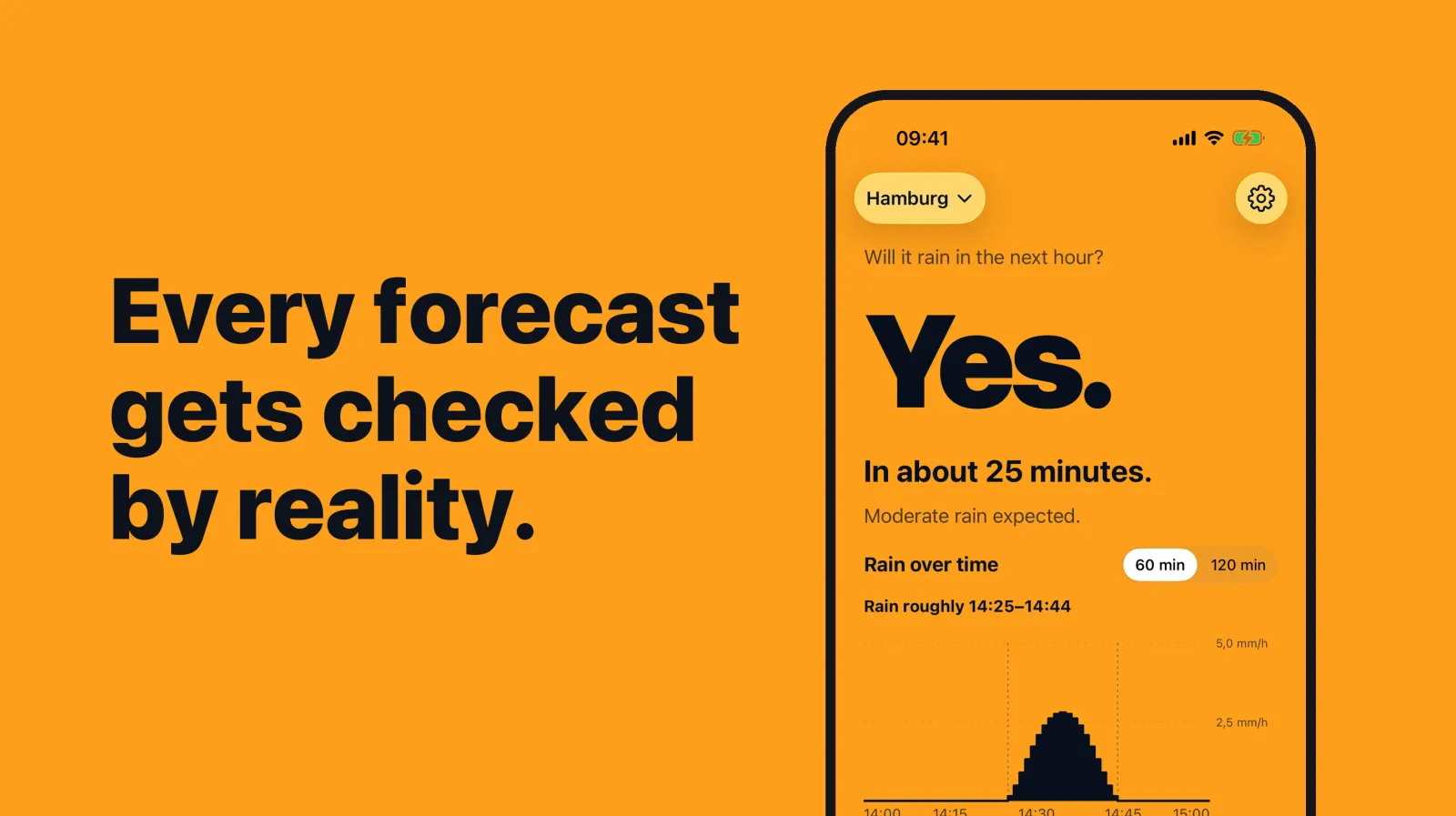
I wanted to learn how well you can predict what happens next with the data you already have. Rain is a good test case for that. The question is simple, there are many sources to draw from, and the answer arrives quickly. Plitsch tells you whether it will rain where you are, and when.
The data comes from several places, much like in a company where sales, service and finance each see a different part of the picture. None of them is right everywhere, so the work lies in knowing which source to trust where. In Germany, the weather service DWD publishes radar every five minutes. Outside Germany I use a forecast provider, and right now I am testing a second one that works from radar. On top of that come the people using the app, who tell me when Plitsch got it wrong.
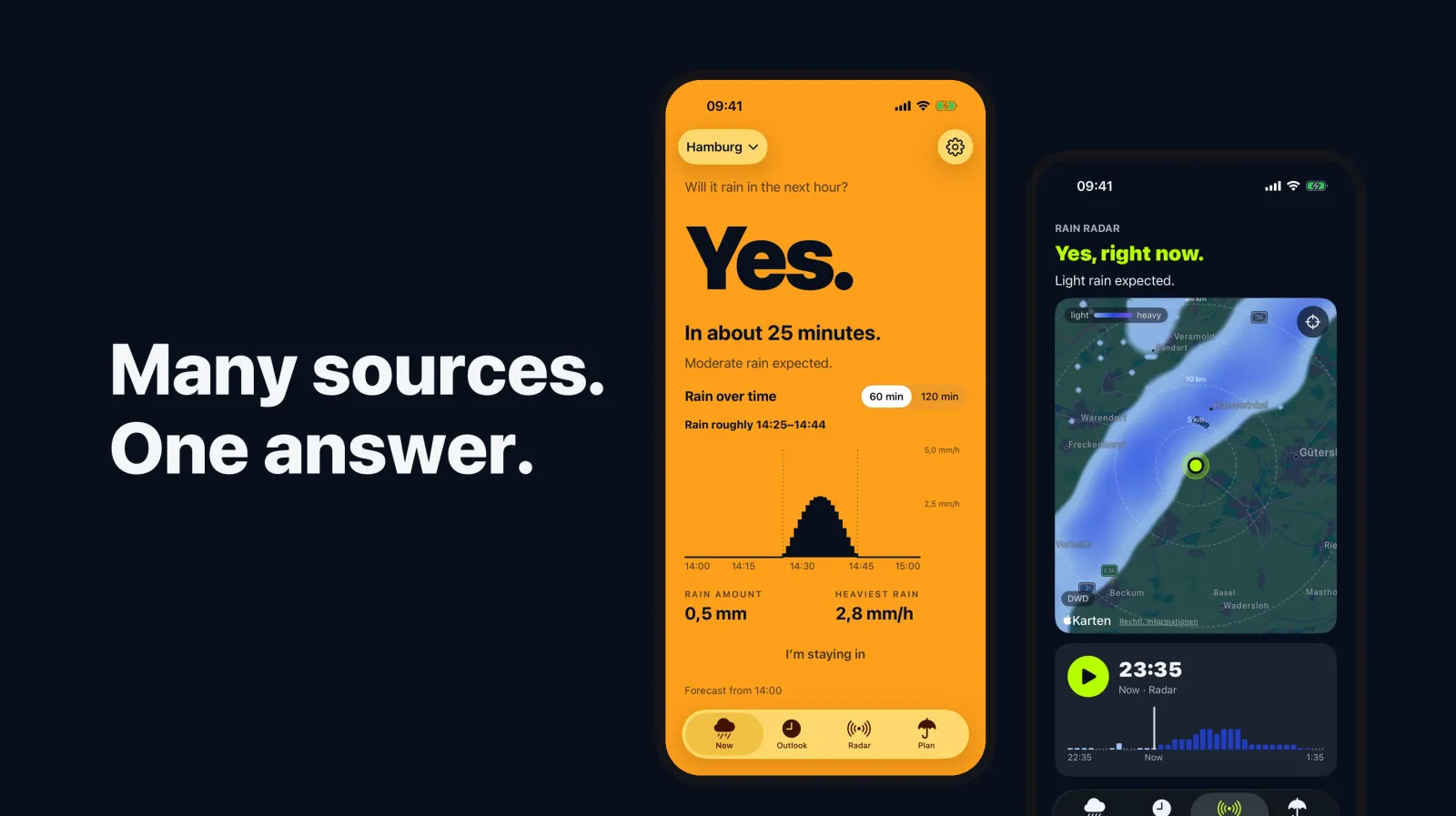
What makes rain so useful for learning is that every forecast gets checked within minutes. If Plitsch says “dry until 14:25”, the radar shows a little later whether that was true. In most businesses that check takes weeks or months, if it happens at all. A sales forecast or a churn estimate is rarely put next to what actually happened.
So I started comparing what Plitsch predicted with what really happened, source by source and place by place. A tester near Hamburg read “It’s drizzling” while the sun was out, so I changed how the app reads very weak signals. Last week a user in Rotterdam stood in the rain while Plitsch said dry. The provider had missed light showers that the Dutch radar clearly showed. Now several sources run side by side across Europe, and the results will decide which one Plitsch relies on in each region.
I think a lot of companies could run this loop with data they already have. What’s usually missing is the habit of putting the forecast next to what actually happened, often enough to learn from the difference.
I am now building the same loop for a manufacturer, with orders, production and competitor prices instead of radar. Most companies have something they would like to see coming earlier.
PS: If you’d like to try Plitsch yourself, it’s on iPhone and Apple Watch. You’ll find everything at plitsch.app.
New pieces go out by mail first.
Subscribe on Substack